#include <timer.hpp>
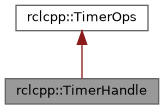
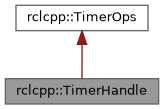
Public Types | |
| using | element_type = ::rclcpp::Timer |
Public Member Functions | |
| constexpr size_t | handle_id () const |
| The packed executor handle this refers to. For introspection and tests. | |
| constexpr | operator bool () const |
| TimerOps * | operator-> () |
timer_->cancel() and friends. | |
| const TimerOps * | operator-> () const |
Const overload of operator->. | |
| void | reset () |
| constexpr | TimerHandle () |
| constexpr | TimerHandle (decltype(nullptr)) |
| constexpr | TimerHandle (void *executor, size_t handle_id) |
Friends | |
| constexpr bool | operator!= (const TimerHandle &a, const TimerHandle &b) |
| constexpr bool | operator!= (const TimerHandle &a, decltype(nullptr)) |
| constexpr bool | operator!= (decltype(nullptr), const TimerHandle &a) |
| constexpr bool | operator== (const TimerHandle &a, const TimerHandle &b) |
| constexpr bool | operator== (const TimerHandle &a, decltype(nullptr)) |
| constexpr bool | operator== (decltype(nullptr), const TimerHandle &a) |
Detailed Description
The handle create_wall_timer / rclcpp::create_timer return, and what Timer::SharedPtr names — phase-476 W2.
Two words, trivially copyable, no allocation, and present on every target: the timer's callable lives in the executor arena (phase-476 W2), so there is nothing on the C++ side for a std::shared_ptr to own. That is what freed timer.hpp from <memory> and <functional>.
timer_->cancel(), timer_->reset(), timer_->is_ready() and timer_->time_until_trigger() keep their rclcpp spelling through operator->, which reaches a [TimerOps].
WHAT DIFFERS FROM A shared_ptr, stated because a ported file cannot see it:
- The handle does not OWN the timer. Dropping or overwriting it leaves the timer firing, where upstream destroys a timer when its last
shared_ptrgoes. The node owns its timers: destroying the node releases them (phase-476 W0). That matches what this API did before W2, when the node co-owned a heap cell for every timer. timer_.reset()RELEASES the timer, for every copy at once: the closest thing to upstream's "drop my reference" that a non-counting handle can offer, and the spelling ported code uses to stop a timer for good.- A copy that outlives a release is SAFE. The handle carries the generation of the slot it was issued for (phase-476 W0), so every operation through a stale copy fails instead of reaching whatever registration took the slot.
Member Typedef Documentation
◆ element_type
Constructor & Destructor Documentation
◆ TimerHandle() [1/3]
|
inlineconstexpr |
◆ TimerHandle() [2/3]
Null, spelled the way a ported file spells it (Timer::SharedPtr timer_ = nullptr;).
◆ TimerHandle() [3/3]
Member Function Documentation
◆ handle_id()
The packed executor handle this refers to. For introspection and tests.
◆ operator bool()
if (timer_). A default-constructed or reset() handle is empty; one from a successful registration is not (even once released elsewhere — the operations are what report that).
◆ operator->() [1/2]
◆ operator->() [2/2]
◆ reset()
|
inline |
timer_.reset() — release the timer: it stops for good, its arena entry and captured callable are freed, and this handle becomes empty. Other copies become stale and fail safely. A no-op on an empty handle.
Friends And Related Symbol Documentation
◆ operator!= [1/3]
|
friend |
◆ operator!= [2/3]
◆ operator!= [3/3]
◆ operator== [1/3]
|
friend |
◆ operator== [2/3]
◆ operator== [3/3]
The documentation for this class was generated from the following file:
- include/rclcpp/timer.hpp
